
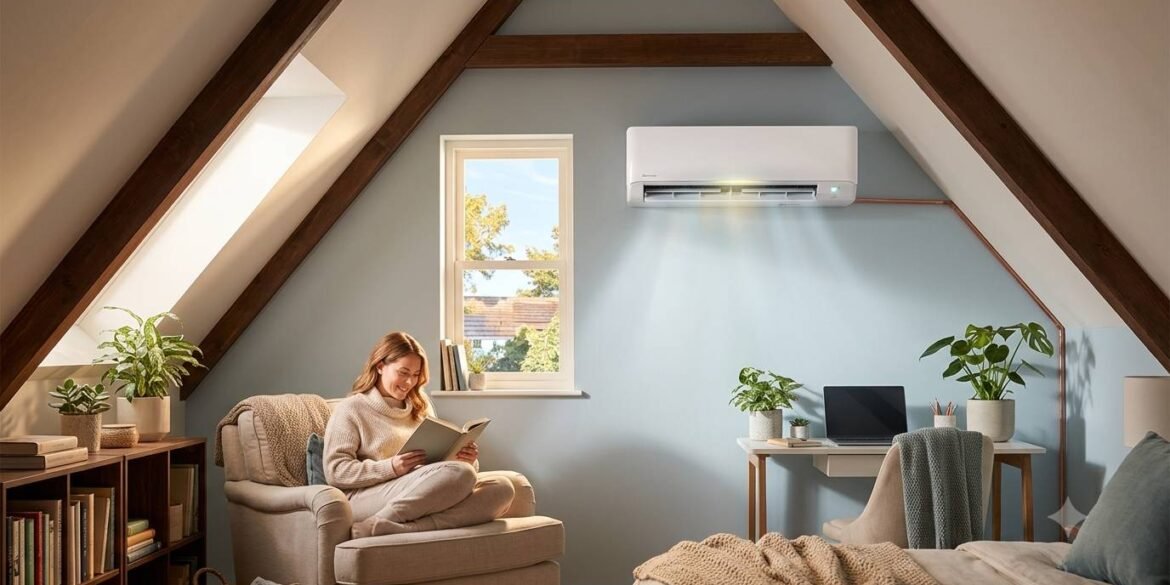
Ductless cooling helps make difficult rooms more comfortable without extending complex ductwork. By delivering conditioned air directly into selected areas, mini-split systems can reduce hot spots, improve temperature control, and support efficient cooling. They are especially useful for additions, upper floors, garages, offices, and other challenging indoor spaces.
Some rooms never feel as comfortable as the rest of the house. They may stay warm because they lack proper ductwork, receive strong sunlight, or sit far from the central HVAC system. Extending existing ducts into these spaces can be costly and disruptive. Homeowners considering ductless mini splits for flexible cooling can create a dedicated comfort zone without making major structural changes. A ductless system delivers cooled air directly into the selected room while allowing independent temperature control. This targeted approach can reduce uneven temperatures, improve airflow, and make hard-to-reach spaces more comfortable during warmer weather.
Why Certain Rooms Are Difficult to Cool
1. Limited or Inefficient Ductwork
Rooms added after the original HVAC system was installed may not have suitable duct connections. Even when ducts extend into the room, long runs, leaks, poor insulation, or badly positioned vents can weaken airflow.
Several spaces commonly experience this problem:
- Converted garages and attics
- Home additions and sunrooms
- Upper-floor bedrooms
- Workshops and home offices
Extending ductwork is not always practical. Walls, ceilings, crawl spaces, and the existing layout may make the work complicated. Ductless cooling avoids many of these challenges because it does not rely on a large network of ducts.
2. Excess Heat Gain
Some rooms naturally collect more heat than others. Large windows, direct sunlight, limited insulation, high ceilings, and their position within the home can all increase indoor temperatures.
A room above a garage may absorb heat from below, while an upper-floor room may become warmer as heat rises through the property. The central thermostat may be located in a cooler area, causing the air conditioner to switch off before the difficult room reaches a comfortable temperature.
How Ductless Cooling Addresses Uneven Temperatures
Direct Cooling Without Extensive Ductwork
A ductless mini-split includes an indoor air-handling unit and an outdoor unit connected by refrigerant lines, wiring, and drainage pipes.
Instead of using ducts, the indoor unit sends cooled air directly into the room, reducing energy loss from leaks or poor insulation.
Installation only requires a small wall opening, making it a good option where adding ductwork would be difficult or invasive.
Independent Room Temperature Control
A key benefit of ductless cooling is the ability to set different temperatures for individual rooms or zones. Each area can be adjusted without affecting the rest of the home.
This is especially useful when cooling needs vary. For example, a sunny office may need more cooling than an unused guest room.
Multi-zone systems allow several indoor units to connect to one outdoor unit, with each unit controlled separately for added comfort.
More Consistent Airflow
Ductless systems circulate air directly within the room, helping reduce hot spots when the unit is properly placed. Many models also adjust output gradually, which helps maintain steadier temperatures instead of frequent on/off cycling. However, correct sizing and placement are still important, as blocked or poorly positioned units can limit airflow.
Planning an Effective Ductless Installation
Select the Correct System Capacity
Correct sizing is essential for comfort. A unit that is too small may struggle to cool the room, while one that is too large may cycle on and off too often.
Professional sizing considers room size, insulation, windows, and usage. A proper assessment helps ensure the system matches the room’s cooling needs.
Position the Indoor Unit Carefully
The indoor unit needs a clear path to distribute air. Tall cabinets, curtains, shelves, and other obstructions can limit airflow and create uneven temperatures.
Placement also affects drainage, noise, maintenance access, and appearance. The unit should be installed where air can move freely throughout the space.
For homeowners researching ductless mini splits for flexible cooling, proper placement is just as important as selecting the right equipment. The indoor unit should be installed where cooled air can move freely throughout the room without being blocked by furniture, curtains, shelves, or other obstacles. Careful placement can improve temperature distribution, reduce hot spots, support quieter operation, and make routine maintenance easier. A professional installer can assess the room layout, sun exposure, ceiling height, and cooling requirements before recommending the most suitable position.
Improve the Room’s Energy Efficiency
A ductless system works best in a well-sealed, insulated room. Gaps around windows and doors let warm air in and cool air out.
Sealing drafts, improving insulation, and using blinds or curtains can help reduce heat gain and keep temperatures more stable. These steps don’t replace proper system sizing, but they do improve efficiency and reduce cooling demand.
Maintaining Reliable Cooling Performance
Keep Airflow Unrestricted
Furniture and decorative items should not block the indoor unit. The outdoor equipment also needs enough open space to release heat effectively.
Leaves, plants, dirt, and stored objects should be kept away from the outdoor unit. Restricted airflow can reduce cooling performance and force the equipment to work harder than necessary.
The indoor unit should remain easy to access so filters can be cleaned and the equipment can be inspected without difficulty.
Clean the Filters Regularly
Filters help capture airborne dust before it reaches internal components. When filters become dirty, airflow may weaken and the system may take longer to cool the room.
Filter cleaning frequency depends on how often the system operates, the amount of household dust, and whether pets are present. Homeowners should follow the manufacturer’s care instructions and inspect filters more frequently during heavy use.
Schedule Preventive Maintenance
Regular maintenance keeps a ductless system running safely and efficiently. A technician can check key components like coils, drainage, refrigerant lines, and electrical parts.
This helps catch small issues early and prevents bigger problems like poor cooling, leaks, or system failure. If the system still doesn’t cool properly after basic checks, professional repair is needed.
Conclusion
For additions, upper floors, converted garages, home offices, and other difficult spaces, ductless mini splits for flexible cooling offer a practical way to improve comfort without redesigning the entire HVAC system. The best results depend on correct system sizing, thoughtful unit placement, unrestricted airflow, clean filters, and regular professional maintenance. Improving insulation and sealing air leaks can also help the room maintain a stable temperature. A qualified HVAC professional can assess the space and recommend a suitable single-zone or multi-zone setup for efficient, dependable, and long-lasting cooling.